
Unlock Summer Fun With Youth Golf Camps Near Me
Unlock Summer Fun With Youth Golf Camps Near Me in Cranston RI
Summer is the perfect time for kids to build skills, make friends, and enjoy outdoor activity, and youth golf camps in Cranston RI offer structured, fun-driven programs that accelerate learning while keeping play at the center. This article explains what local summer junior golf programs cover, how age-appropriate tracks progress from fundamentals to advanced course play, and which camps stand out for coaching quality, technology, and community fit. Parents will learn how camps develop physical coordination, mental focus, and social skills through measurable practice routines, games, and small-group instruction.
Read on for a ranked list of top local options for Summer 2025, a clear breakdown of program types by age and skill, an evidence-style table comparing typical camp offerings, a focused look at benefits tied to real training activities, and a step-by-step registration and preparation checklist so families can pick and prepare for the right program. Keywords such as youth golf camps this summer, junior golf camps Cranston, and kids golf lessons Rhode Island are woven throughout to help you find the best local fit quickly.
What Are the Best Youth Golf Camps in Cranston RI for Summer 2025?
Local parents choosing a summer golf camp prioritize coaching quality, facility access, and age-appropriate curriculum; the top options in Cranston combine those elements with flexible schedules and clear progression paths. Below are three highly recommended camp types and brief differentiators to help families decide quickly based on age, skill level, and goals.
- Grand Slam-style weeklong junior camps: Focused days with skill stations, on-course play, and fun competitions that suit beginner to intermediate juniors.
- Half-/full-day clinic programs at local clubs: Ideal for younger kids or mixed-sport families who want shorter days with fundamentals and games.
- Advanced academy tracks and tournament prep: Small-group, data-driven instruction for teens focusing on swing mechanics, course strategy, and scoring.
This short comparison highlights program fit by goal, and the next subsection breaks options down by age and daily activities to match your child’s needs.
Which Junior Golf Summer Programs Are Available for Different Age Groups?
Junior golf programs typically divide participants into clear age brackets to match cognitive and motor development with lesson content and game formats. Typical groupings are younger juniors (6–9), middle juniors (10–13), and teens (14–17), with each bracket emphasizing appropriate skills: fundamentals and fun for the youngest, skill consolidation for middle juniors, and advanced mechanics and course strategy for teens. Daily schedules mix warm-ups, short-game stations, full-swing practice, and supervised on-course segments, and group sizes generally favor 6–10 kids to maximize coaching attention. Coaches often use progressive skill goals—accuracy, distance control, and course management—so parents see measurable improvement week to week. This structure prepares children for both recreational play and competitive opportunities if families choose to pursue them later.
Before the table below, this compact comparison shows how beginner, intermediate, and advanced tracks differ so you can match goals and age quickly.
| Program Type | Age Group | Key Outcomes / Schedule / Price |
|---|---|---|
| Beginner Week Camp | 6–9 | Daily fundamentals, games, 3–4 hours/day; focus on putting and swing basics |
| Intermediate Clinic | 10–13 | Mix of drills and on-course play, 4–6 hours/day; improves consistency and rules |
| Advanced Academy | 14–17 | Small-group coaching, video/tech analysis, on-course strategy; tournament prep |
This table helps parents compare core program structures at a glance so they can pick the right starting point for their child.
After reviewing local options, families seeking a Cranston-based summer program can consider GOLF Academy with Todd Campbell’s 2025 junior lineup. The academy operates from a 1,575 sq ft facility at Cranston Country Club and offers weeklong and session-based junior camps that mirror the beginner-to-advanced progression above; parents can view program pages or registration details directly through the academy’s official scheduling channels to confirm dates and availability.
How Do PGA Junior Golf Camps Near Me Enhance Kids’ Skills and Fun?
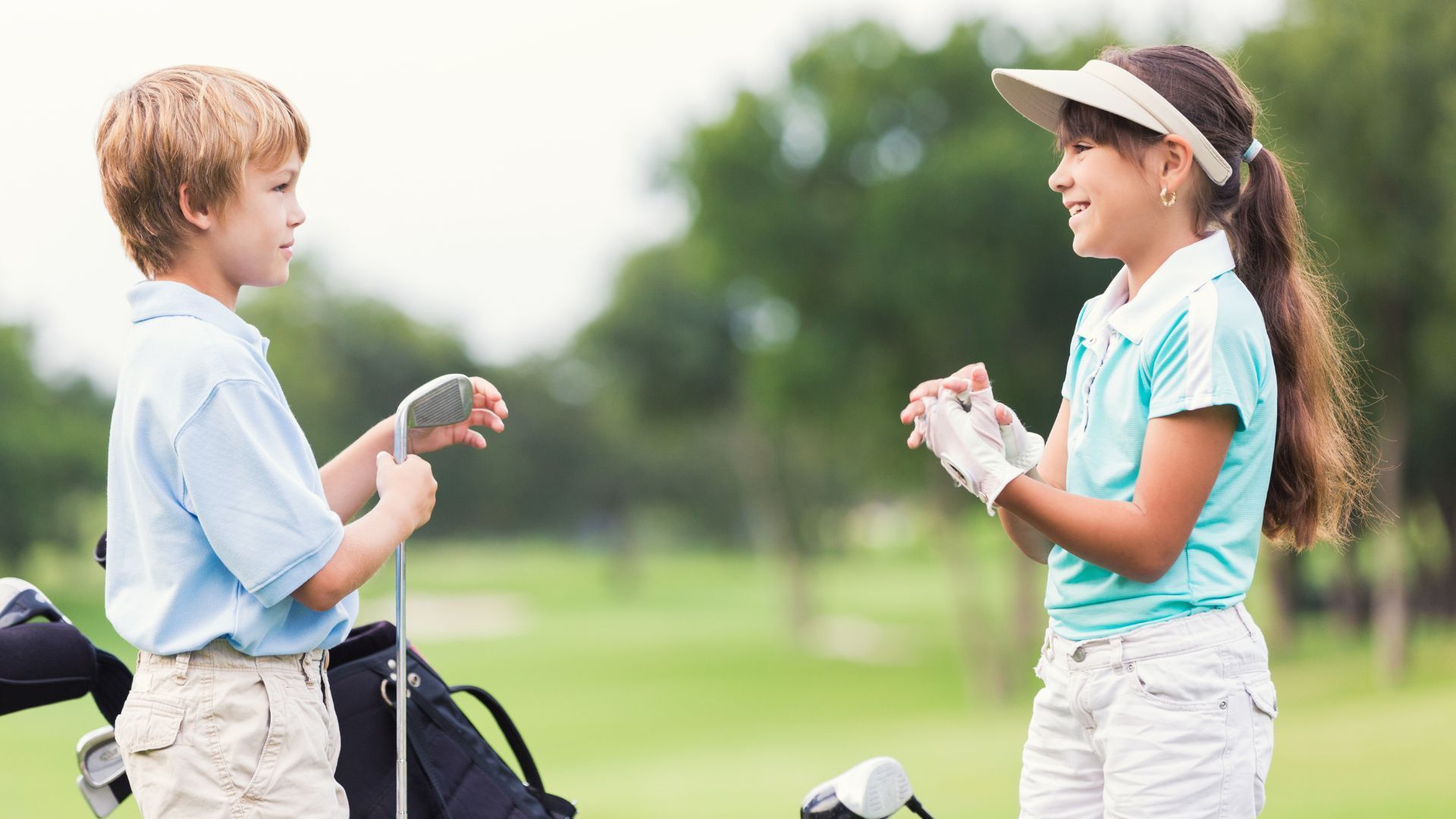
PGA junior golf camps enhance skills by blending expert coaching methods with play-based learning and measurable practice routines, which keeps sessions engaging while producing reliable improvement. Instructors use station-based drills, short-sided games, and friendly competitions that reinforce motor patterns, decision-making, and shot execution under low-pressure conditions. Camps often integrate tech feedback for objective progress—video swing review, simple metrics, and age-appropriate analytics—to show kids how small adjustments change outcomes and to keep motivation high through visible improvement. This mix of fun and data-driven coaching supports steady gains in accuracy, consistency, and confidence, and it naturally transitions students into more advanced training or on-course play.
How Do PGA Junior Golf Camps Near Me Enhance Kids’ Skills and Fun?
Junior camps use a variety of teaching techniques and activities to make practice engaging and effective for children at all levels. Common methods include short-game stations focused on putting and chipping, progressive full-swing drills that emphasize impact and balance, and on-course challenges that teach club selection and tempo under real conditions. Games such as target contests, team scrambles, and shot-limitation rounds create friendly competition while reinforcing repeatable motor patterns and decision-making skills. These approaches keep attention high and provide immediate, observable results—kids see improved accuracy in putting, reduced dispersion on target drills, and better course management choices. Coaches then use short review sessions to set measurable goals for the next day, closing the loop between practice and performance.
Why Choose GOLF Academy with Todd Campbell for Kids Golf Lessons in Rhode Island?
GOLF Academy with Todd Campbell stands out in Cranston for its combination of recognized coaching credentials, focused junior curriculum, and technology-enabled instruction delivered in a compact, dedicated facility at Cranston Country Club. Todd Campbell is a PGA Member and received recognition as Golf Digest Best Teacher for 2024–2025 as well as Rhode Island PGA Teacher of the Year in 2022 and 2023, signaling consistent peer and industry acknowledgment of teaching quality. The academy uses data tools—TrackMan, Sportsbox AI, Rotary Swing, Swing Catalyst, Sam PuttLab, AimPoint Express, and Titleist TPI—to provide measurable feedback that accelerates learning while keeping sessions age-appropriate and engaging. The 1,575 sq ft state-of-the-art indoor academy supports year-round technical work and simulator-based learning that transfers directly to on-course skills. Those credentials and tools combine to offer a learning pathway for juniors seeking fun, measurable improvement, and personalized coaching plans.
What Awards and PGA Credentials Does Todd Campbell Hold?
Todd Campbell’s credentials give parents clear assurance about teaching standards and curriculum design at the academy. He is a PGA Member, indicating formal professional training and adherence to PGA coaching practices. He was recognized as Golf Digest Best Teacher for 2024–2025, a national recognition that highlights instructional excellence, and he earned Rhode Island PGA Teacher of the Year in both 2022 and 2023, reflecting consistent regional acclaim. These specific awards and affiliations imply a commitment to ongoing professional development, evidence-based coaching, and junior-friendly program structures. Understanding these credentials helps parents weigh instructor quality when choosing between local summer camp options.
How Does State-of-the-Art Technology Improve Junior Golf Training?
Modern training technologies speed up learning by providing objective data and instant, visual feedback that kids can easily understand and act on during practice. TrackMan captures ball flight and club delivery metrics so juniors can see how swing changes affect distance and accuracy, while Swing Catalyst and Sam PuttLab analyze weight transfer and putting mechanics. Sportsbox AI and Rotary Swing offer video and motion analysis to illustrate improvements frame-by-frame, and AimPoint Express helps juniors learn green reading with a simple, repeatable method. Titleist TPI assessment tools guide physical screening to match drills with each student’s movement profile. Using these technologies in age-appropriate ways turns subjective coaching into measurable progress that keeps young players motivated and focused on specific outcomes.
What Are the Key Benefits of Junior Golf Camps for Youth Development?
Junior golf camps deliver a mix of physical, mental, and social benefits that extend beyond the course and support overall youth development through structured practice and group activities. Camps improve motor coordination and cardiovascular activity while teaching concentration, decision-making, and emotional regulation under competition-like conditions. Socially, camps foster teamwork, sportsmanship, and communication through partner drills and team challenges, and measurable outcomes include improved putting accuracy, reduced shot dispersion, and demonstrated goal attainment on weekly skill checks. The table below maps key benefits to camp mechanisms and expected outcomes so parents can see how time on the course translates into broader developmental gains.
| Benefit | Mechanism | Outcome |
|---|---|---|
| Confidence | Mastery of short, measurable skills | Visible competence in drills and on-course play |
| Discipline | Daily routine and goal-setting | Improved practice habits and focus |
| Social Skills | Team games and peer feedback | Better communication and sportsmanship |
| Physical Fitness | Repeated movement and walking | Enhanced coordination and stamina |
This mapping clarifies how camp activities translate to real developmental improvements so families can set expectations and measure progress during camp sessions.
How Do Youth Golf Camps Build Confidence, Discipline, and Social Skills?
Camps build confidence by breaking larger skills into small, achievable goals—hitting specific targets, improving putt percentage, or lowering score in a friendly scramble—so children experience frequent wins that reinforce self-efficacy. Discipline is cultivated through consistent practice routines, warm-up protocols, and clear progress checkpoints that make daily effort predictable and rewarding. Social skills grow naturally through paired drills, team formats, and shared learning moments where juniors give and receive constructive feedback. Coaches structure tasks so that individual improvement supports team success, and the predictable camp environment helps shy players join group activities and celebrate peers’ progress. These mechanisms help translate on-course experiences into transferable life skills.
What Physical and Mental Advantages Do Kids Gain From Golf Camps?
Physically, golf camps improve hand-eye coordination, balance, and aerobic activity through repeated swings, short-game practice, and walking between holes or stations. Mentally, kids develop concentration, strategic thinking, and stress management by making shot choices, adapting to changing conditions, and practicing routine-based preparation. Measurable outcomes parents often see within a session or two include steadier putting, more consistent contact on full swings, and improved focus during coaching blocks. Camps also encourage active lifestyles and reduce sedentary time by providing structured outdoor activity that families can maintain beyond camp weeks.
How Can Parents Register and Prepare for Summer Golf Academy Programs for Youth?
Registering and preparing for a junior golf program is straightforward when you know the key steps and packing checklist; follow a simple process to secure spots and maximize your child’s camp experience. Begin by identifying the appropriate age/skill track, note available session dates, and gather required details such as participant age, experience level, and emergency contact information. Early registration is advised for popular weeks; ask about group size limits and coaching ratios to ensure individualized attention. Prepare your child with short pre-camp practice sessions, a basic equipment check, and a familiarization conversation about camp routines to reduce first-day nerves.
- Choose the right program track based on age and skill.
- Confirm session dates and availability for the selected week(s).
- Complete registration form with health/emergency info and skill level.
- Pack recommended gear and arrive early on day one for check-in.
This checklist keeps registration simple and ensures kids arrive confident and ready to learn.
What Is the Camp Schedule and Pricing for Youth Golf Camps in Cranston RI?
Schedules commonly follow a daytime format—half-day sessions are often 3–4 hours including warm-up, skills stations, and games, while full-day programs extend to 6–7 hours with lunch and more on-course time. Pricing typically reflects duration and coach-to-player ratios, with options priced per day or per week and occasional membership discounts for local club members; families should confirm exact rates when registering. Sample daily structure includes arrival and dynamic warm-up, technical stations (putting, chipping, full swing), supervised on-course play, and a closing skills check or game to reinforce that day’s goals. Contact program coordinators directly to obtain the current schedule and precise pricing for each session.
What Should Kids Bring to Junior Golf Camps and What Equipment Is Provided?
A clear packing list helps parents prepare children for a productive and safe camp day; camps usually provide some shared equipment but recommend personal basics for comfort and fit. Essentials to pack include a water bottle, sunscreen, appropriate athletic clothing and hat, a light jacket for cooler mornings, and personal clubs if available and age-appropriate. Many academies supply loaner clubs and practice balls for beginners, and sizing or club-fitting services may be offered to ensure juniors use the correct length and loft for efficient learning. Parents should label gear and check with the program about loaner club availability and any specific footwear requirements to avoid surprises on the first day.
This article has presented local options, program structures, technology-enabled coaching approaches, measurable benefits, and practical registration and packing guidance to help families select and prepare for youth golf camps in Cranston this summer.